These days I find that the more I experience, the more I open my mind and my senses to the new and limitless, the more I experience time as something wholly other than the chronological orderings imposed by human beings. I want to discuss Time and Creativity in terms that are as free and open to new possibilities as possible.
My wife and I recently went on a January trip to Florence in order to escape the UK winter and to experience something truly beautiful. We saw works by Giotto in the Church of Santa Croce from the 1300s; we took in Michelangelo’s David (finished in 1504) and saw genius at close quarters; and we drank in the view of Florence from the basilica of San Miniato al Monte and had our preconceptions about what a ‘city’ can aspire to be firmly challenged. Florence is a city as a work of Art. The Dome of Brunelleschi that crowned the Cathedral of Saint Mary of the Flower in 1436 is an awe-inspiring construction that transcends time and decay and decline and irony and cynicism.
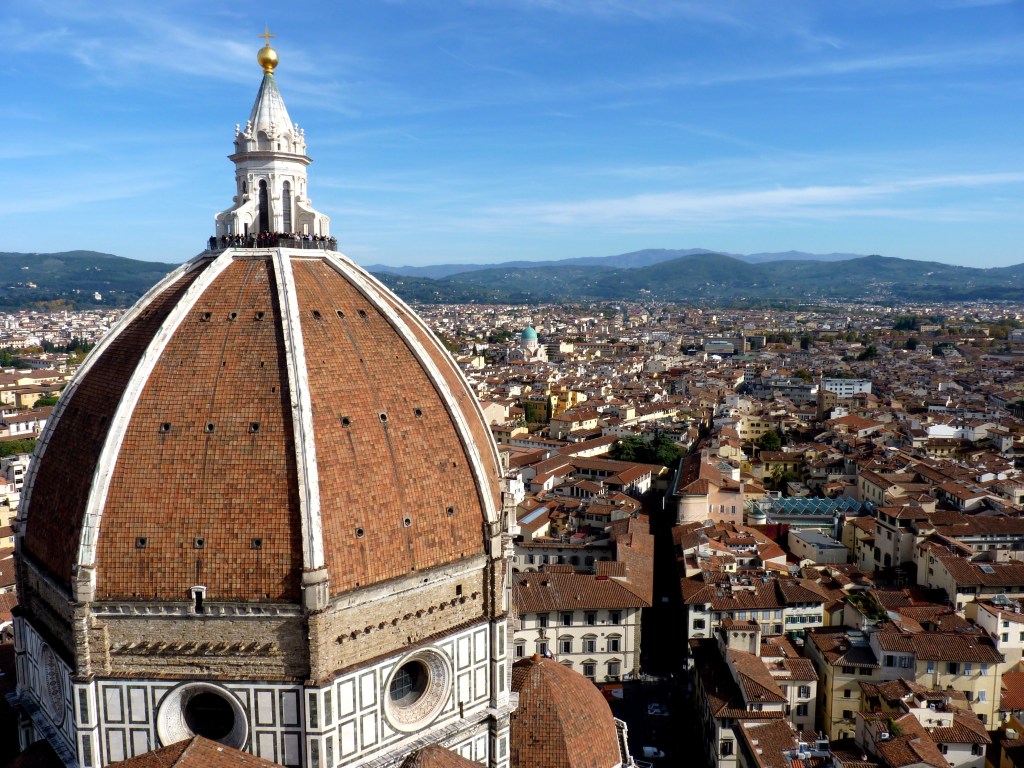
The effects of this place on the people who live there must be extraordinary. As soon as we arrived I felt the urge to write, to create. Such concentrated creative energy and restless genius makes me realise how brief the lives of human beings really are. The marble David lives on with a reach far beyond anything that its genius creator could ever have envisaged. Is that part of the reason why human beings feel this overwhelming urge to create, in order to leave some form of legacy that time cannot touch and destroy?
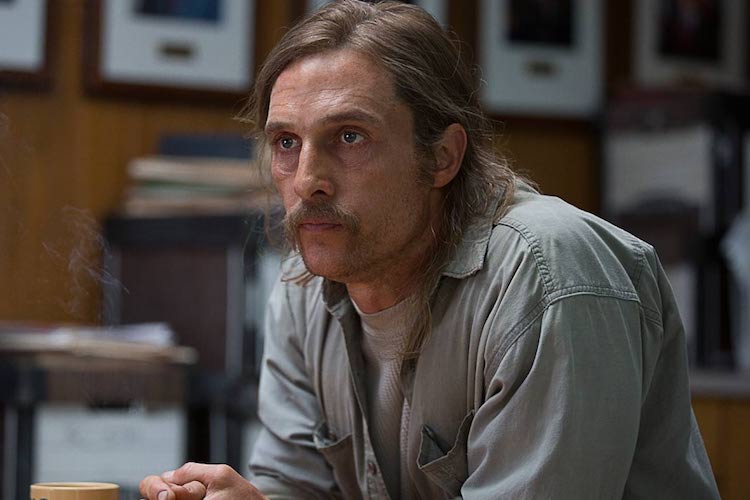
In Nic Pizzolatto’s brilliant True Detective Season One, Matthew McConaughey’s Rust Cohle discusses Time in nihilistic terms. The theme of Time as ‘a flat circle’ in which everything we ever do is replayed over and over is key to this character. Rust’s nihilism is revealed as a means of coping with the loss of his young daughter as well as the extreme nature of his work. He talks about Death creating Time in order to grow the things that it would kill. This is a direct discussion of the limitations inherent in the human conception of Time in which we use chronology to measure out our own mortality and in doing so impose human limitations upon the universe. The interesting counterpoint to this is that True Detective Season One is great Art that will be watched and studied and analysed far beyond the mortal limitations of its actors and creators.
Art is not timebound in the way that human beings are. I find it so liberating to think beyond human lifespans and to realise that no human being is ever really ‘old’. Inherent in our ability to accept the necessary limitations of our own mortality seems to me to be a belief that the existence of our universe is also timebound, that there is perhaps an inbuilt expiry date on everything. Perhaps this is true. Perhaps, like Rust Cohle’s flat circle, everything will simply go back to the beginning and start again. If we can begin to see time as something that allows people living today to have a relationship with Giotto and Brunelleschi and Da Vinci and Michelangelo through the works of Art they left behind, then Time becomes a liberating force rather than a killing and ending force.
Lately I’ve been reading Rick Rubin’s book ‘The Creative Act’. He talks about ideas as having a time in which they need to be expressed, and writer or painter or musician etc as a conduit for the idea. Many of his insights into creativity are about observing what’s going on around us and realising that to create isn’t only to sit down and “work at” whatever we are doing. In this approach, human beings are in a constant dialogue with the universe. Part of this dialogue is with the works of Art that inspire and influence and terrify us. The exchanges between creators throughout the ages transcend human chronology. Rick Rubin believes that we create for ourselves before we even consider any potential audience. This reminds me of Quentin Tarantino saying that he makes the kind of films he would like to go and see. Rubin believes that this is the way to make authentic and valuable art and to find one’s audience. Again, this is about conversation – exchange. If we can communicate with many others by creating first and foremost for ourselves, then there is something universal in the creative act that once again goes far beyond the limitations of human lifetimes and of human chronology.
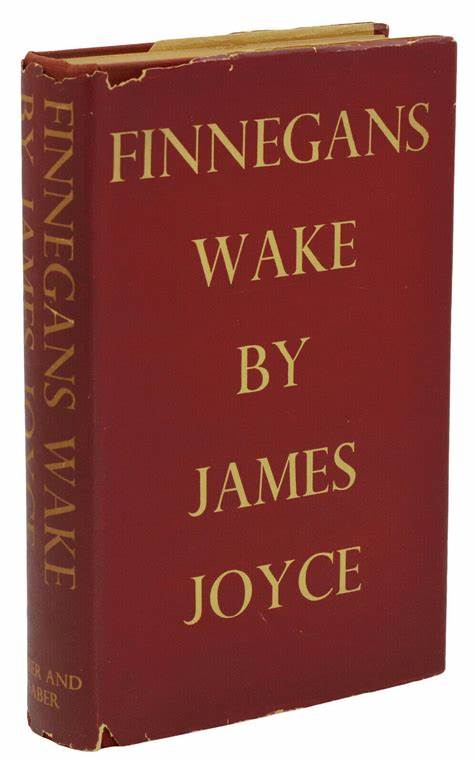
While typing this blog post I’m listening to an interview with Cormac McCarthy in which he discusses the ‘night shift’ – the creative work that is done by the unconscious mind while we sleep and while we are not focusing directly on our creative work. This unconscious mind and the world of dreams are no more constrained by human conceptions of time than is the universe itself. McCarthy discusses Finnegans Wake and anybody who has delved into the depths of this work can see that this is Art in dialogue with everything that has gone before and everything that will come after.
Great Art allows us to transcend the limitations of our own mortality. It allows us to ‘slay time’ in the words of William Faulkner. The ticking of the clocks that so haunt Quentin Compson throughout his last day on earth in The Sound and the Fury need not necessarily haunt us as we create because we are engaged in a process and a conversation that has been going on since homo sapiens first told stories to one another. We can take a Rust Cohle approach that considers Time as a destructive force that scythes down everything in its path in a random fashion. The degradation and decay we experience as timebound human beings certainly provides enough evidence to support this. But Art transcends this and continues to offer up new interpretations and inspire new ideas and new voices contributing to the universal conversation.
 Better things for better living, but not through chemistry